Day: Sunday September 20th

  • One Maryland One Book 2026 Spotlight: Lawrence Burney presents “No Sense in Wishing” in converSatioN With Doreen St. Félix

    A personal and analytical essay collection from culture critic Lawrence Burney that is a personal and analytical look at his home city of Baltimore, music from throughout the global Black diaspora, and the traditions that raised him.

    There are moments in our lives when we discover an artist, an album, a film, or a cultural artifact that leaves a lasting impression. These moments inform how we understand the world, and ourselves, moving forward.

    In a time when music is spurring Black Americans’ connection with Africans on the Continent, culture critic Lawrence Burney takes us on a journey from the streets of Baltimore to the concert halls of Lagos, reminisces on seeing his mother perform as the opening act of a Gil Scott-Heron show when he was a child, and sits at a Maryland crab feast with family, assessing how the Black people in his home state have historically improvised paths for their liberation. Burney explores these profound interactions with incisive and energizing prose, offering us a personal and critical perspective on the people, places, music, and art that transformed him.

    No Sense in Wishing is a kaleidoscopic exploration of Burney’s search for self. With its gutsy and uncompromising criticism alongside intimate personal storytelling, this “powerful collection of essays” (Rolling Stone) is like an album that hits all the right notes, from a promising writer on the rise.
  • Austin Channing Brown presents “Full Of Myself: Black Womanhood and the Journey to Self-Possession” in conversation w/Tarana Burke

    In a time of rising authoritarianism and attacks on personal freedoms, the New York Times bestselling author of I’m Still Here chronicles her efforts to live as her full self in a society that wants women—and Black women in particular—to do anything but that.

    “A book that resonates and asks us to dig deep—not with judgment, but so that we better understand ourselves and the world around us.”—Phoebe Robinson, bestselling author, founder of Tiny Reparations Books

    As an antiracism educator and writer leading through America’s cycles of racial unrest, Austin Channing Brown reached a crossroads. “I love my work,” she writes, “and I am tired. We are tired. Tired of protesting. Tired of ‘saving democracy.’ Tired of educating and explaining.” She began to ask, “What do I deserve, not just as a citizen but as a human?”

    Full of Myself answers that question. Weaving personal narrative with perceptive social commentary, Brown offers a look at the mechanisms that limit who Black women are allowed to be—at work, at home, in community—and the defining moments when she decided that self-possession is the justice work she had been made to undervalue. From skinny-dipping in the ocean to becoming a mom, she delves into the drama of life and invites readers to begin defining themselves not as empty vessels to improve the world, but as a people born free in spirit, in hope, in joy.

    For Black women seeking to understand the true roots of their burnout, or for anyone wondering what it means to live joyfully in a hostile world, Full of Myself is a breath of fresh air and an invitation to full humanity.

  • Monique Couvson presents “Black Stats” and “Pushout: The Criminalization of Black Girls in Schools” in conversation w/Lisa Snowden

    An essential handbook of eye-opening—and frequently myth-busting—facts and figures about the real lives of Black Americans today and a powerful exploration of the harsh and harmful experiences confronting Black girls in schools.

    There’s no defeating white supremacist myths without data—real data. Black Stats is a compact and useful guide that offers up-to-date figures on Black life in the United States today, avoiding jargon and assumptions and providing critical analyses and information. Monique Couvson has compiled statistics from a broad spectrum of telling categories that illustrate the quality of life and the possibility of (and barriers to) advancement for a group at the heart of American society. With fascinating information on everything from disease trends, incarceration rates, and lending practices to voting habits, green jobs, and educational achievement, the material in this book will enrich and inform a range of public debates while challenging commonly held yet often misguided perceptions.

    About Pushout: The Criminalization of Black Girls in Schools

    On the day fifteen-year-old Diamond from the Bay Area stopped going to school she was expelled for lashing out at peers who constantly harassed and teased her for something everyone on the staff had missed: she was being trafficked for sex. After months on the run, she was arrested and sent to a detention center for violating a court order to attend school. A decade later, Black girls continue to be the fastest growing population in the juvenile justice system.

    On the tenth anniversary of its publication, Pushout, Monique Couvson’s groundbreaking book, hailed by educator Lisa Delpit as “imperative reading,” remains as urgent and necessary as ever. Couvson chronicles the experiences of Black girls across the country whose complex lives are misunderstood, highly judged—by teachers, administrators, and the justice system—and degraded by the very institutions charged with helping them flourish. Painting “a chilling picture of the plight of Black girls and women today” (The Atlantic), Couvson exposes a world of confined potential, and supports the rising movement to challenge the policies, practices, and cultural illiteracy that push countless students out of school and into unhealthy, unstable, and often unsafe futures.

    This tenth-anniversary edition is truly a book “for everyone who cares about children” (The Washington Post), serving as both a call to action and a testament to the lives and futures we must protect.

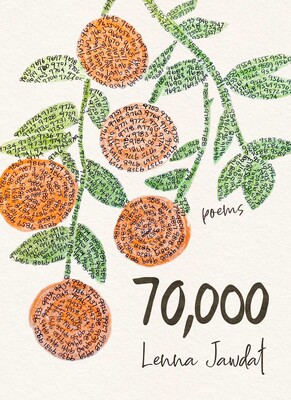
  • Lenna Jawdat: “70,000: POEMS”

    Lenna Jawdat: “70,000: POEMS”

    A conversation about Lenna Jawdat’s 70,000: an “embodied meditation on cultural displacement, memory, and resilience.”

    70,000 is a visceral and inventive poetry collection inspired by the removal of approximately 70,000 books from Palestinian homes and private libraries before and during the events of 1948. Of those books, most have not been returned; about 6,000 remain housed in Israeli national collections, where they are largely inaccessible to Palestinians.

    A powerful act of remembrance and resistance, 70,000 transforms cultural erasure into an archive of grief, memory, and hope.

  • Molly Crabapple presents “Here Where We Live Is Our Country: The Story of the Jewish Bund” in conversation w/Margaret Killjoy

    The dramatic story of the Jewish Bund—a revolutionary movement from a vanished world—and its radical vision of solidarity in an age of division.

    “Molly Crabapple beckons readers through a portal to an irresistible, lost world, one bound together by passion, solidarity, and a burning hunger for justice.”—Naomi Klein, New York Times bestselling author of No Logo and Doppelganger

    In the aftermath of the Holocaust, Sam Rothbort created “memory paintings” with the hope of resurrecting the vanished world of his shtetl childhood. Decades later, his great-granddaughter, the award-winning artist Molly Crabapple, discovered these paintings and one stood out: a girl, her dress the color of sky, hurling a rock through a cottage window. Itka the Bundist, Breaking Windows.

    Itka is how Crabapple met the Jewish Labor Bund. Once the most influential Jewish political force in eastern Europe, the Bund was secular, socialist, and uncompromisingly anti-Zionist. The Bundists fought for dignity and equality, not in an imagined homeland in Palestine but “here where we live.”

    In the first popular history of the Bund, Crabapple re-creates their extraordinary world through dramatic portraits of insurgent poets and antireligious rebels, clandestine revolutionaries and lovers on the barricades. The Bundists live deeply within this violent, volatile, and somehow hopeful period, as their stories interweave with the Russian Revolution and the Holocaust. The Bund’s rise and fall raises the vital question: What can we learn from a movement that, for all its toughness, imagination, and moral clarity, was largely destroyed?

    Here Where We Live Is Our Country reanimates a band of idealists who broadened our global political imagination. As we once again contend with nationalism, repression, and the struggle for belonging, the Bund’s remarkable story and message—that liberation, dignity, and solidarity must begin where we stand—reaches across time as a guide to our own urgent moment.